A new child care setting brings unfamiliar people, sounds, rooms, and rhythms all at once. A few predictable anchors can make that change easier to understand. In the days before the first visit, talk simply about what will happen: a grown-up will bring the child, teachers will be there, and the grown-up will return.
Preparing for the First Weeks of Child Care in New Tripoli
Family Guides
Start with a few familiar anchors
If the program permits a comfort item or family photo, choose it together. Ask in advance what should be packed, what needs a name label, and what must stay at home. Knowing those details prevents a rushed first morning.
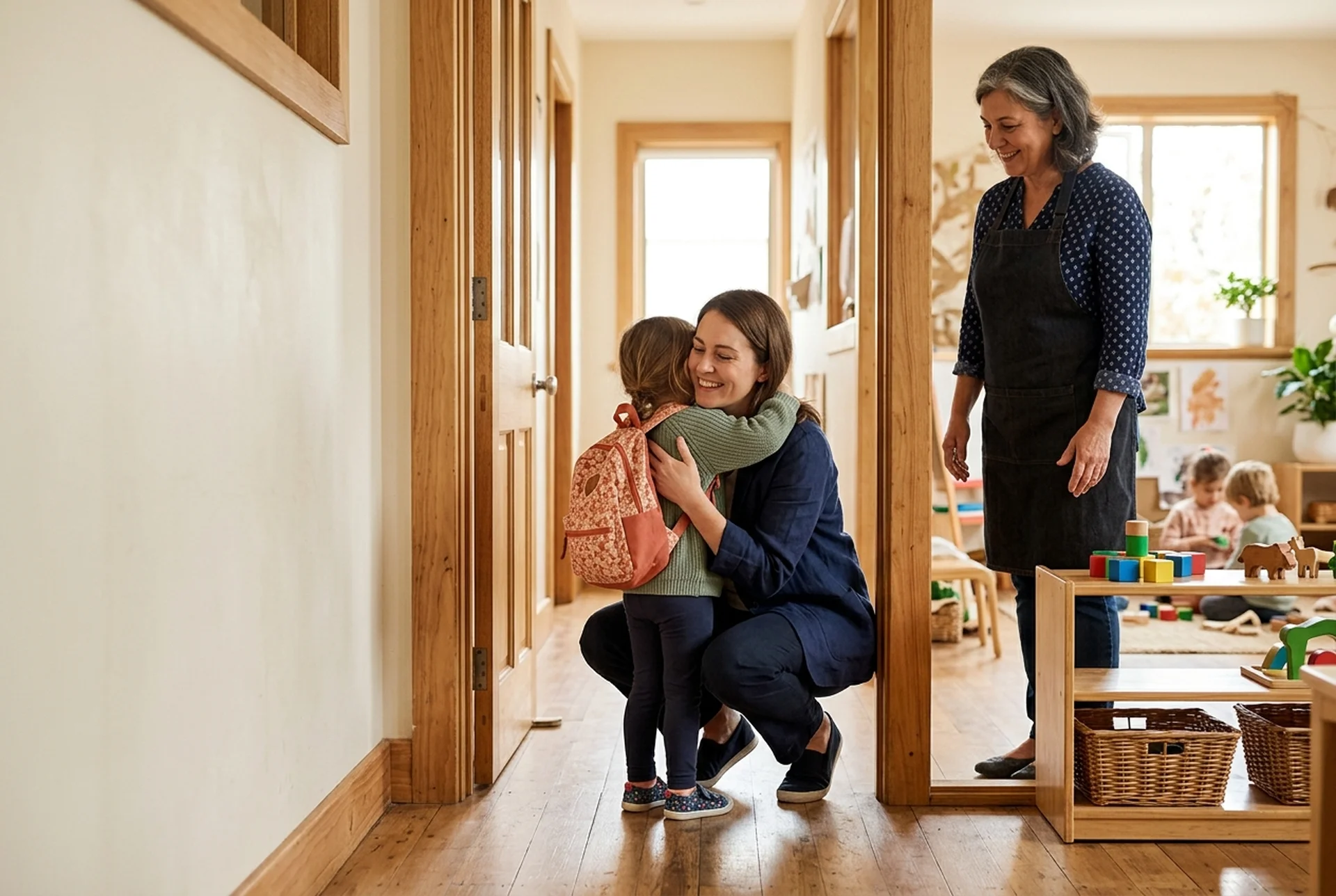
Keep the goodbye warm and clear
Long, uncertain goodbyes can make separation harder. A short ritual—a hug, one reassuring sentence, and a confident handoff—gives the child a sequence they can begin to recognize. Avoid disappearing without saying goodbye, even when leaving quietly seems easier in the moment.
Tears at separation do not automatically mean the placement is a poor fit. They are one way young children express a major transition. Ask the program how it handles difficult drop-offs and when families can expect an update.
Expect adjustment to be uneven
Some children separate easily at first and react later; others need time before each goodbye becomes familiar. Progress is rarely a straight line. Look for patterns across several days instead of judging the experience from one difficult morning or one tired evening.
At pickup, reconnect before asking many questions. A snack, a cuddle, or quiet time may help more than an immediate review of the day. When concerns persist, bring specific observations to the program and ask what staff are seeing. Shared, concrete information is more useful than guessing from either side.